
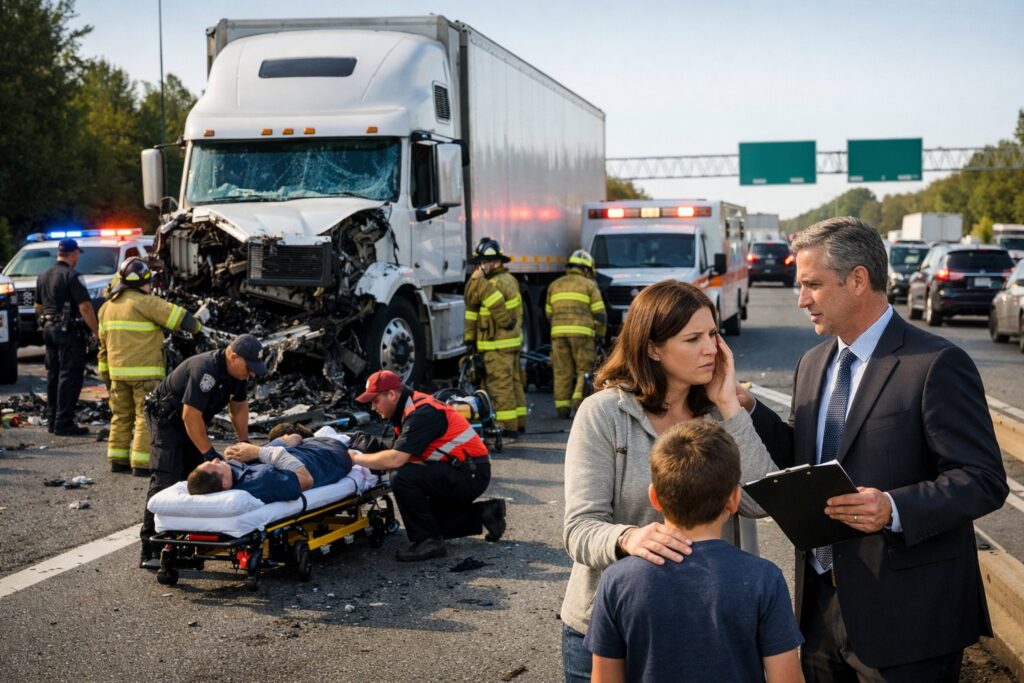
A truck crash can flip your whole life upside down in just a few seconds. Suddenly, you’re left with injuries, medical bills, lost wages, and a wrecked car, plus the headache of figuring out who’s actually going to pay for all this.
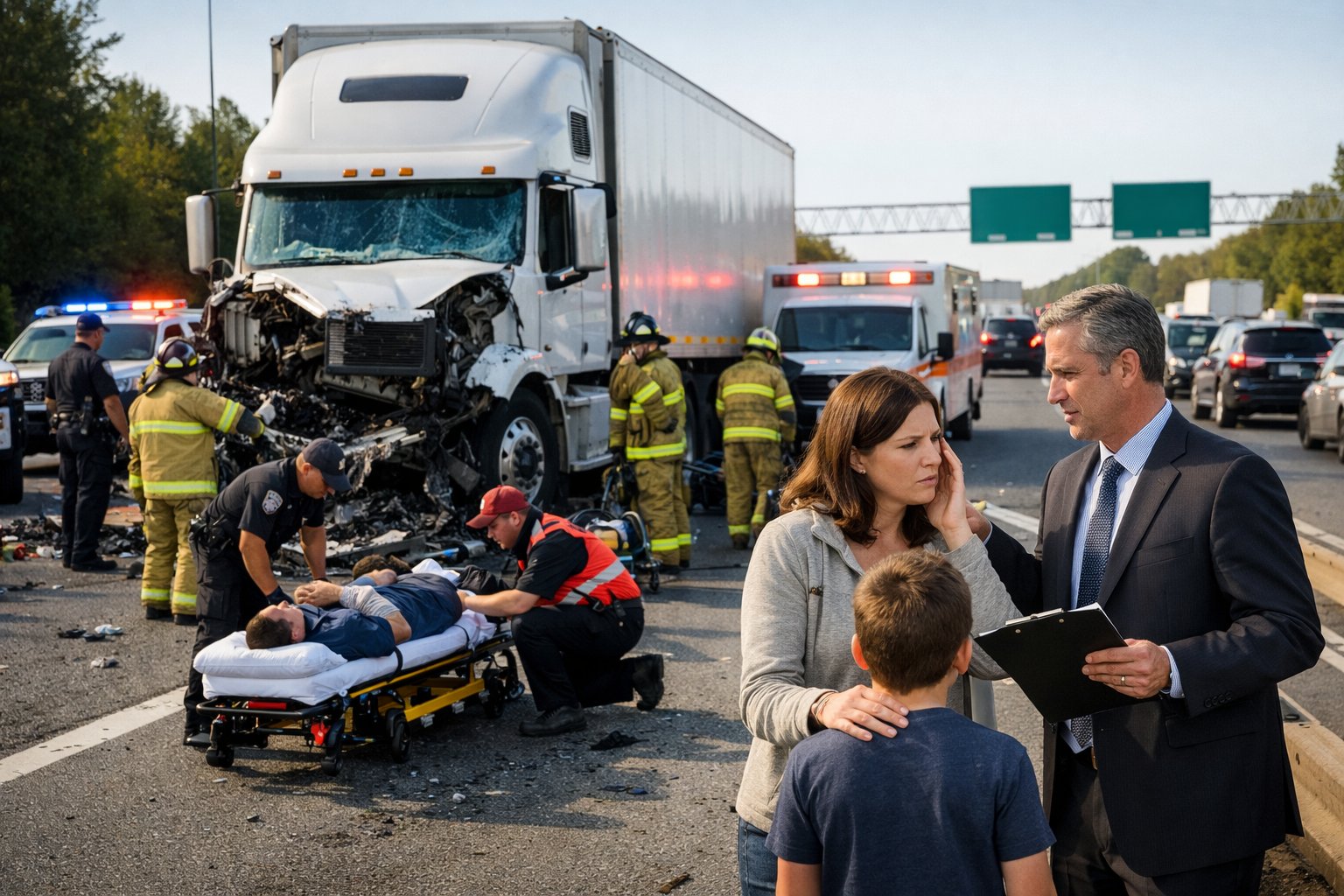
Usually, the trucking company’s insurance covers damages after a truck crash. But sometimes, you can get compensation from the truck driver, cargo company, or even the vehicle manufacturer, depending on who caused it. Getting paid isn’t automatic, though, you’ll need to prove fault and show your losses with solid evidence.
Truck accidents often involve several people or companies who share responsibility, which makes these cases trickier than your average car wreck. Figuring out who owes you and how to actually get the money can make a huge difference in your recovery.
Key Takeaways
- Trucking companies and their insurers usually pay damages in truck crashes.
- You can get compensation for medical bills, lost wages, property damage, and pain and suffering.
- Several parties might be liable, including the driver, the trucking company, and equipment manufacturers.
Understanding Who Pays After a Truck Crash
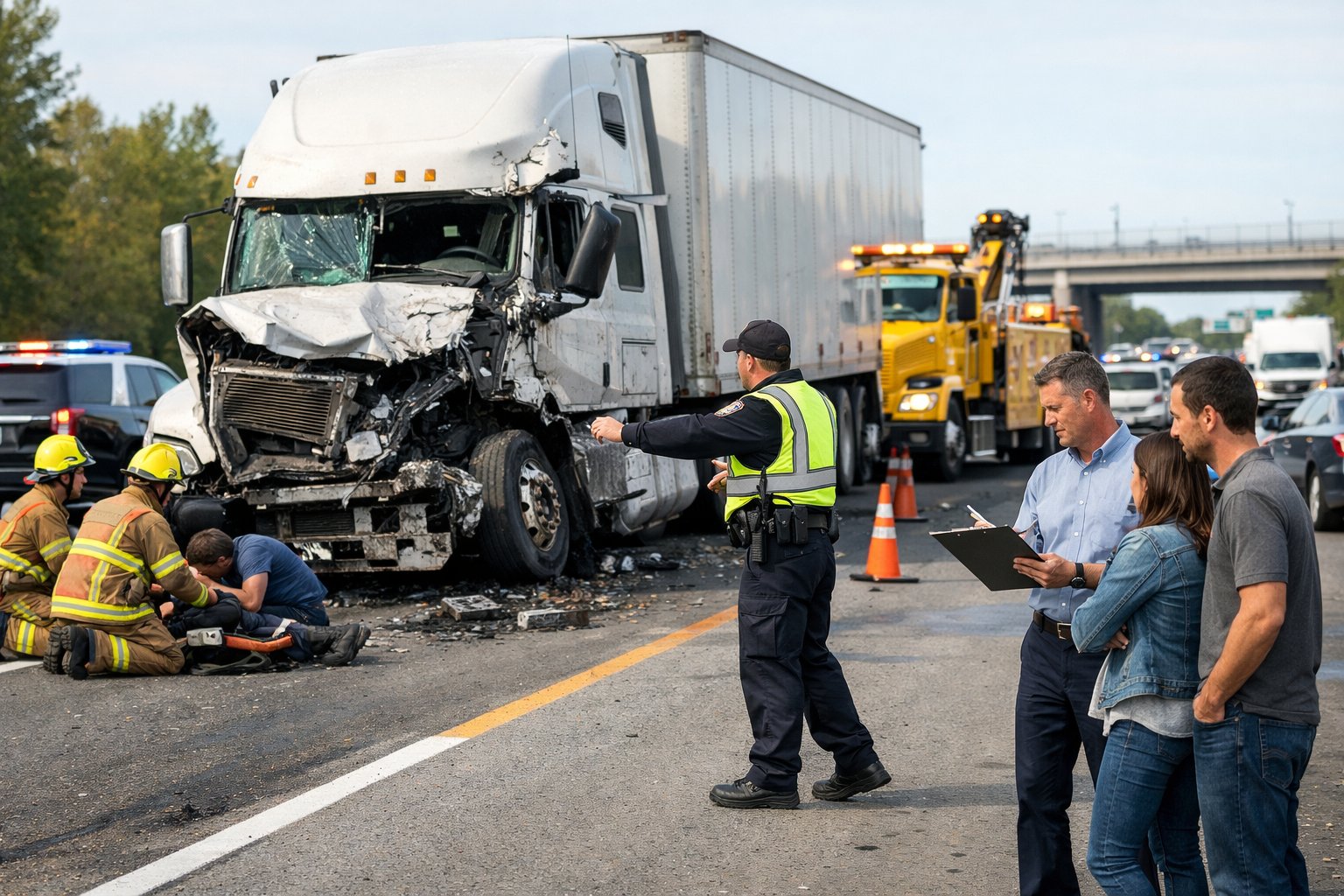
After a commercial truck accident, more than one party might have to pay. Who’s on the hook depends on who caused the crash and what exactly happened.
The trucking company, the driver, cargo loaders, or even the people who made the truck might owe you money. It really comes down to the details of your accident.
Key Parties Responsible for Compensation
Usually, the trucking company takes the main hit for damages. They have to carry insurance policies that range from $750,000 to $5 million or more, depending on what they’re hauling.
The truck driver might be personally responsible in some cases, especially if they were doing something outside their job. Cargo loading companies can also get pulled in if they messed up the load.
Other folks who might be on the hook:
- Truck maintenance shops that skipped repairs
- Parts manufacturers if something was defective
- Third-party logistics companies
- Government agencies if bad roads played a role
Insurance adjusters from all these groups will dig into your claim. If you work with a truck accident lawyer, they’ll help you spot everyone who should pay, so you don’t leave money on the table.
How Liability Is Determined in Truck Accidents
To prove liability, you’ve got to show someone messed up and that mistake caused your injuries. The at-fault party had a duty to keep you safe, they didn’t, and you got hurt as a result.
Collecting evidence is huge here. Police reports lay out what happened at the scene. The truck’s black box records stuff like speed, braking, and how long the driver was on the road.
Maintenance logs show whether the company kept their trucks in shape. Driver logs tell if they followed the rules about hours behind the wheel.
Witnesses can back up your side of the story. Accident reconstruction experts look at the physical evidence to figure out what really went down.
Liability often comes from stuff like:
- Distracted driving
- DUI
- Speeding or reckless moves
- Breaking trucking laws
- Poor driver training
Your attorney gathers all this and works with experts to build your claim. Some states use comparative fault rules, which could mean you get less if you share part of the blame.
When Truck Drivers Are Personally Liable
Truck drivers sometimes have to pay out of pocket if they weren’t acting as employees. If they took the truck for personal errands or did something the company didn’t okay, they might be on the hook themselves.
Criminal stuff, like driving drunk or on purpose being reckless, usually lands on the driver, not the company. If the driver’s an independent contractor, they might be personally responsible too.
You might need an expert to figure out if the driver was on the job or not. Your lawyer will dig into the relationship between the driver and the company.
Even when drivers are technically liable, they rarely have enough money or assets to cover big damages. That’s why it’s so important to look for other responsible parties.
Trucking Company Liability Explained
Trucking companies usually end up responsible under something called “respondeat superior,” which just means employers pay for stuff their workers do on the job. If the driver was working, the company’s probably on the hook.
If the company itself screwed up, like hiring unsafe drivers, skipping training, or pushing drivers to break rules, that’s direct negligence. Not fixing trucks or ignoring problems also counts.
The law says companies have to follow certain safety rules, like screening drivers and keeping trucks maintained. Breaking these rules makes your case stronger.
Your lawyer can get company records to find out if they cut corners or encouraged unsafe driving. Sometimes, these records show a pattern of bad behavior that can really boost your claim.
Types of Damages After a Truck Crash: Who Pays and How Much?

Truck accident claims cover a bunch of different damages, some for your actual financial losses, others for your pain and suffering. How much you get depends on who’s at fault, what insurance is available, and how badly you’re hurt.
Economic Damages: Medical Expenses, Property Damage, and Lost Income
Economic damages pay you back for money you’ve actually lost. You’ll need bills, receipts, and pay stubs to prove it.
Medical bills can pile up fast, hospital stays, surgeries, meds, therapy, and even future care if you’re not done healing. You can claim both past and future medical expenses.
Property damage means fixing or replacing your car if it’s trashed. Lost income covers the paychecks you missed while you were out. If your injuries keep you from going back to your old job, you can claim future lost income too.
Usually, the truck driver’s insurance or the company’s policy pays these damages. Just make sure you’ve got documentation for everything.
Non-Economic and Punitive Damages After a Truck Wreck
Non-economic damages are for stuff you can’t really put a price on. Pain and suffering covers the physical pain and emotional stress you go through.
If you can’t do things you used to love, you can claim loss of enjoyment of life. Permanent injuries that mess with your daily routine or relationships also count.
Punitive damages are different, they’re meant to punish really bad behavior, like a company forcing drivers to skip rest. Not every case gets these, though.
Insurance companies usually figure out non-economic damages by multiplying your economic losses or using a daily rate. Your lawyer will negotiate based on what similar cases have settled for.
Insurance, Subrogation, and Truck Accident Settlements
Most truck accident settlements involve several insurance policies. Commercial trucks carry way more coverage than regular cars, think $750,000 to $1 million or even higher.
Insurance adjusters will look over your claim and toss out an initial offer. Usually, that first offer is low. Your lawyer pushes back to get you what you really deserve.
If your health or auto insurance pays your bills upfront, they might want that money back from the at-fault party’s insurance. That’s called subrogation, and it can affect how much you pocket from the settlement.
How much you get depends on the proof of liability, how bad your injuries are, and the insurance limits. If insurance doesn’t cover everything, you might have to sue the company or driver.
Frequently Asked Questions
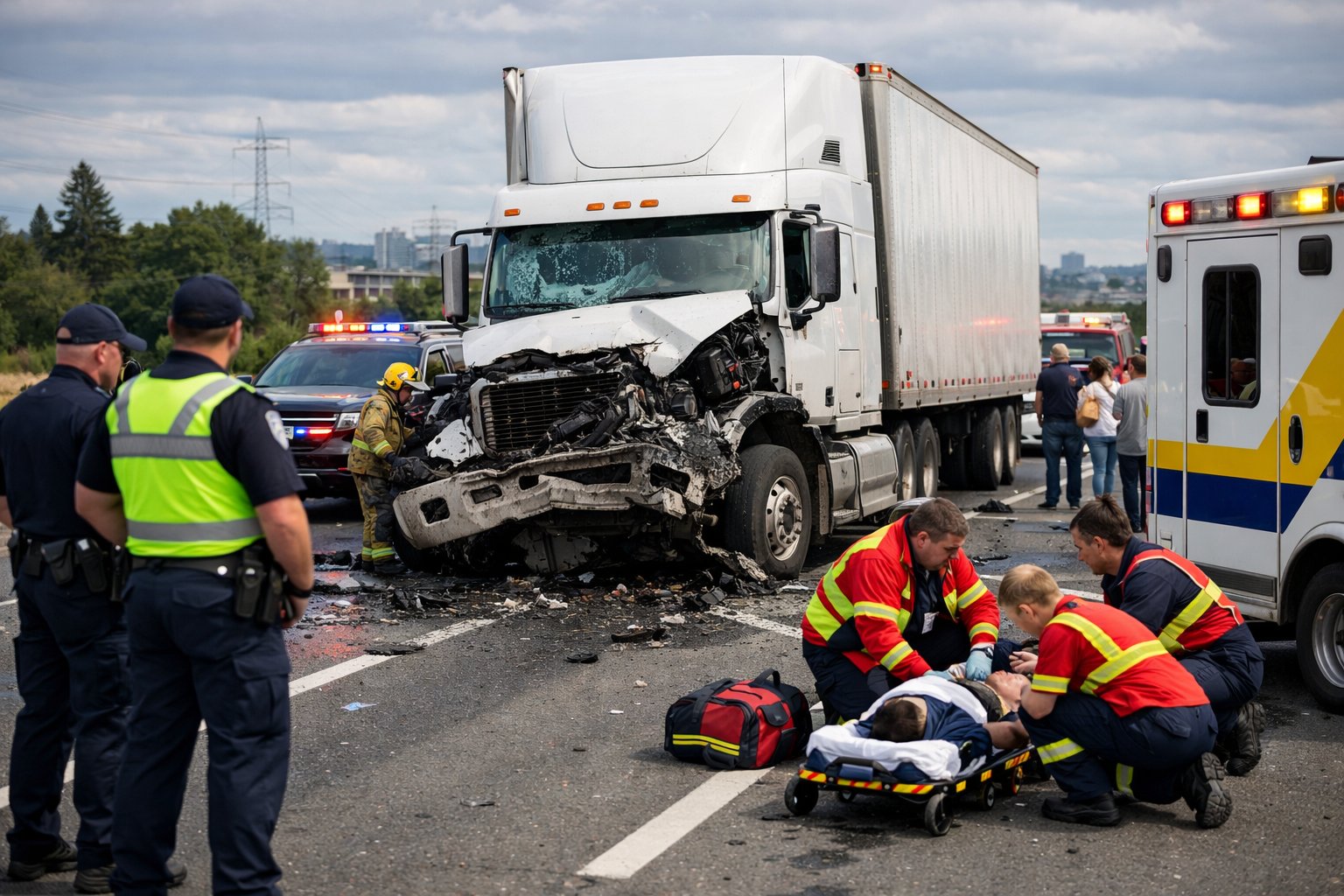
Truck accidents can leave you with a ton of questions about the law, your rights, and who’s actually responsible. Here are some answers to the stuff people ask most.
What are the legal steps to take after being involved in a truck accident?
Call 911 right away to report the crash and get medical help. Even if you feel okay, some injuries don’t show up right away.
Get the truck driver’s info, license number, insurance, and the company’s name. Snap photos of the scene, damage, road conditions, and any injuries you can see.
Don’t sign anything from insurance companies or give recorded statements until you talk to a lawyer. Protect yourself first.
Keep every medical record, bill, and piece of paperwork about your injuries and treatment. You’ll need all of it for your claim.
How is liability determined in a commercial trucking accident?
Investigators look at a bunch of things to figure out who’s at fault. They review police reports, talk to witnesses, and check out evidence from the crash.
Trucking companies keep records of driver hours, maintenance, and training. These files can show if they broke safety rules.
Experts might check skid marks, damage, and data from the truck’s black box. That info reveals speed, braking, and what the driver did right before the crash.
What types of damages can be claimed after a truck accident?
You can claim medical expenses, everything from emergency care to surgery, hospital stays, and rehab. If you’ll need more treatment later, future costs count too.
Lost wages cover what you missed while you were out. If you can’t go back to work, you can claim lost earning capacity.
You might also get compensation for pain and suffering, emotional distress, and a lower quality of life. Don’t forget property damage to your car or stuff inside it.
Are truck drivers or trucking companies held accountable for accidents?
Both can be responsible, depending on what happened. Drivers get blamed if they break traffic laws, drive tired, or act recklessly.
Trucking companies are usually liable under “respondeat superior,” which means they pay for what their employees do at work. They’re also on the hook if they hire unqualified drivers, skip training, or pressure drivers to break rules.
Sometimes, more than one party is at fault, like manufacturers, cargo loaders, or maintenance contractors. You might need to file claims against several people to get fully compensated.
What role does truck maintenance play in accident responsibility?
Trucking companies have to inspect and maintain their vehicles by law. Problems like brake failure, blown tires, or steering issues often come from bad maintenance.
If records show skipped inspections or fake reports, the company is on the hook for crashes caused by mechanical problems. Maintenance shops might also be liable if they did sloppy work.
Truck manufacturers can get pulled in if defective parts caused the accident. Product liability claims cover design flaws, bad manufacturing, or missing safety warnings.
How do contributory negligence laws affect compensation in truck accident cases?
If you share some fault for the accident, you might see your compensation go down. States don’t all handle this the same way, so it really depends on where you are.
In contributory negligence states, you can’t recover any compensation if you’re even just 1% at fault. Only a handful of states stick to this strict approach.
Most states actually use comparative negligence instead. This means they’ll reduce your compensation based on your share of the blame.
Let’s say you’re 20% responsible and your damages add up to $100,000, you’d end up with $80,000.
A few states won’t let you recover anything if you’re more than 50% at fault. Your lawyer can help you figure out exactly how your state’s laws play out in your situation.