
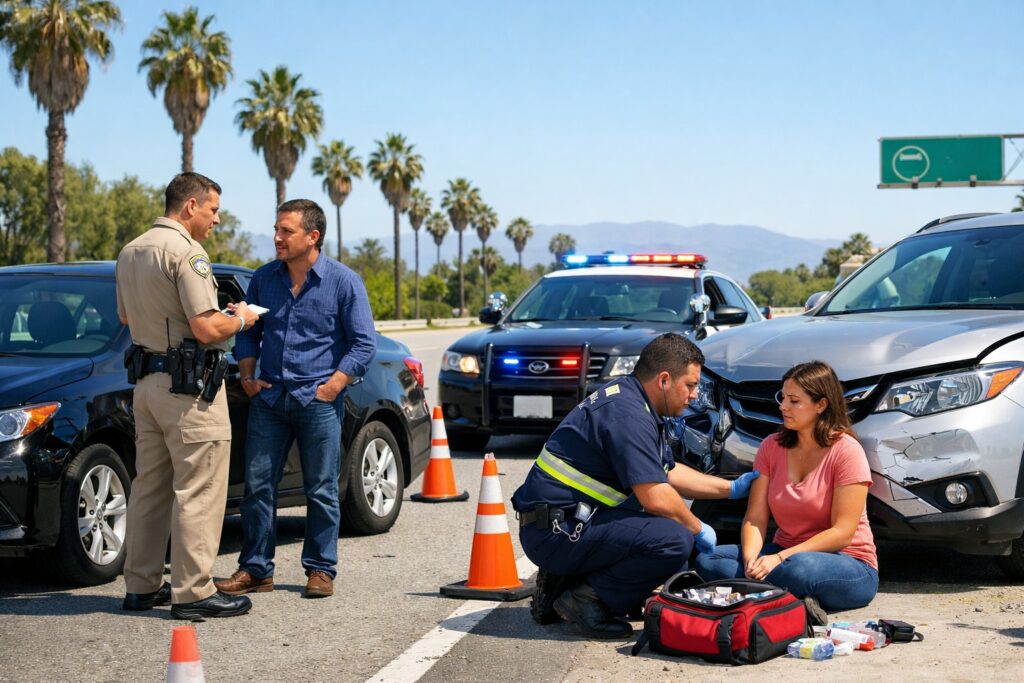
Those first 24 hours after a car accident in California? They can seriously shape everything that comes next—your health, your insurance claim, and even your legal rights. What you do right after the crash can make or break your chances of getting compensation and protecting yourself legally.
A lot of folks don’t realize that even small mistakes during those first hours can snowball into much bigger headaches later on.
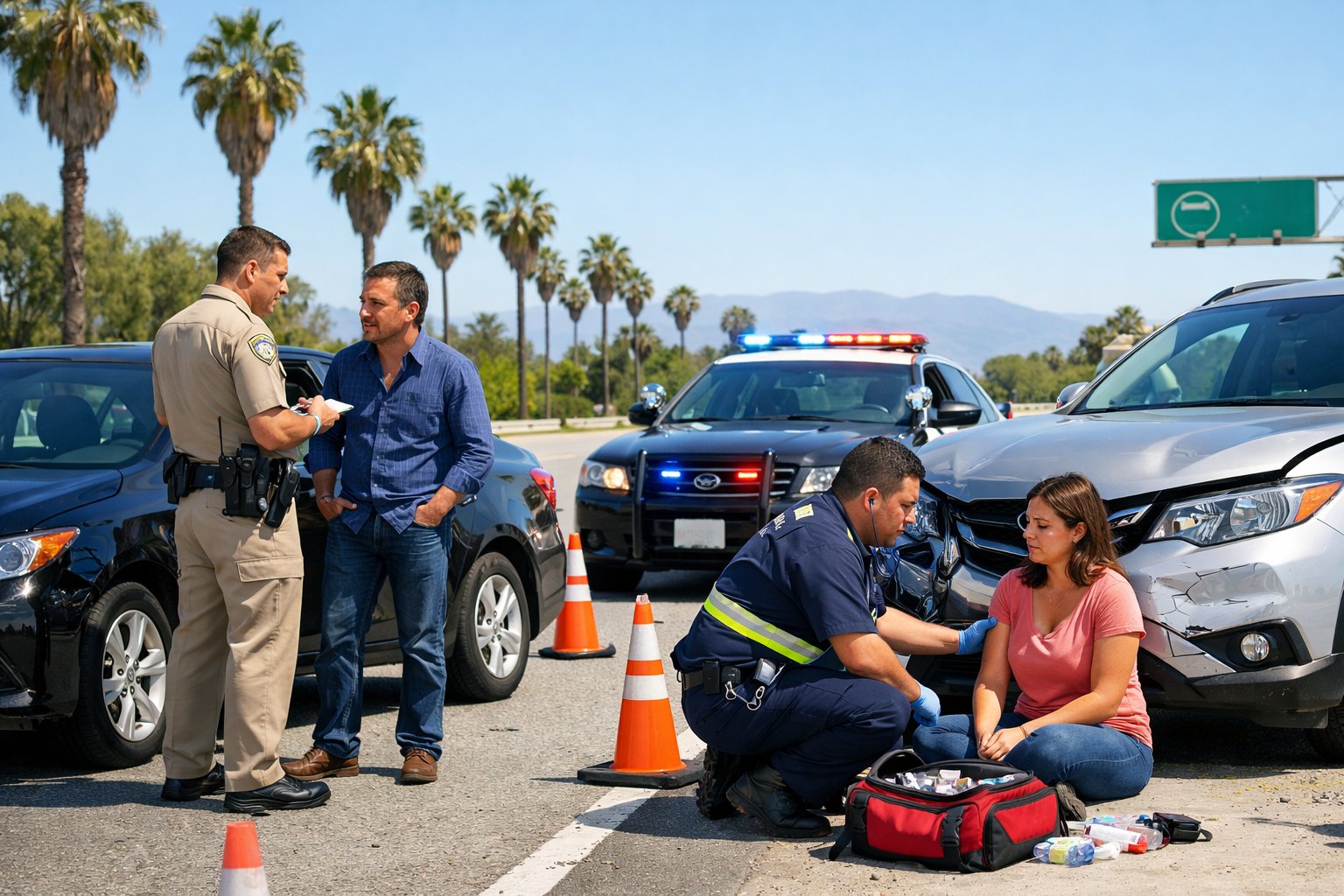
The most important things you can do? Get medical attention (even if you feel fine), report the accident to your insurance company, document everything at the scene, and look out for your legal rights. Sometimes your body hides injury symptoms at first, and insurance companies love to use any delay in treatment against you.
The evidence you grab now could be the difference if you need to make a claim or file a lawsuit.
If you know what to do, step by step, you’ll dodge a lot of the common mistakes that end up costing people thousands. Let’s walk through what you actually need to do in those first 24 hours to protect your health, your wallet, and your legal options.
Key Takeaways
- Seek medical care and report the accident to insurance within the first day to protect your claim.
- Document the accident scene with photos, witness info, and police reports—this stuff is critical if you end up needing legal help.
- Taking smart steps right after a crash helps you get compensation and steers you clear of mistakes that can ruin your case.
Critical Steps to Take in the First 24 Hours After a California Car Accident
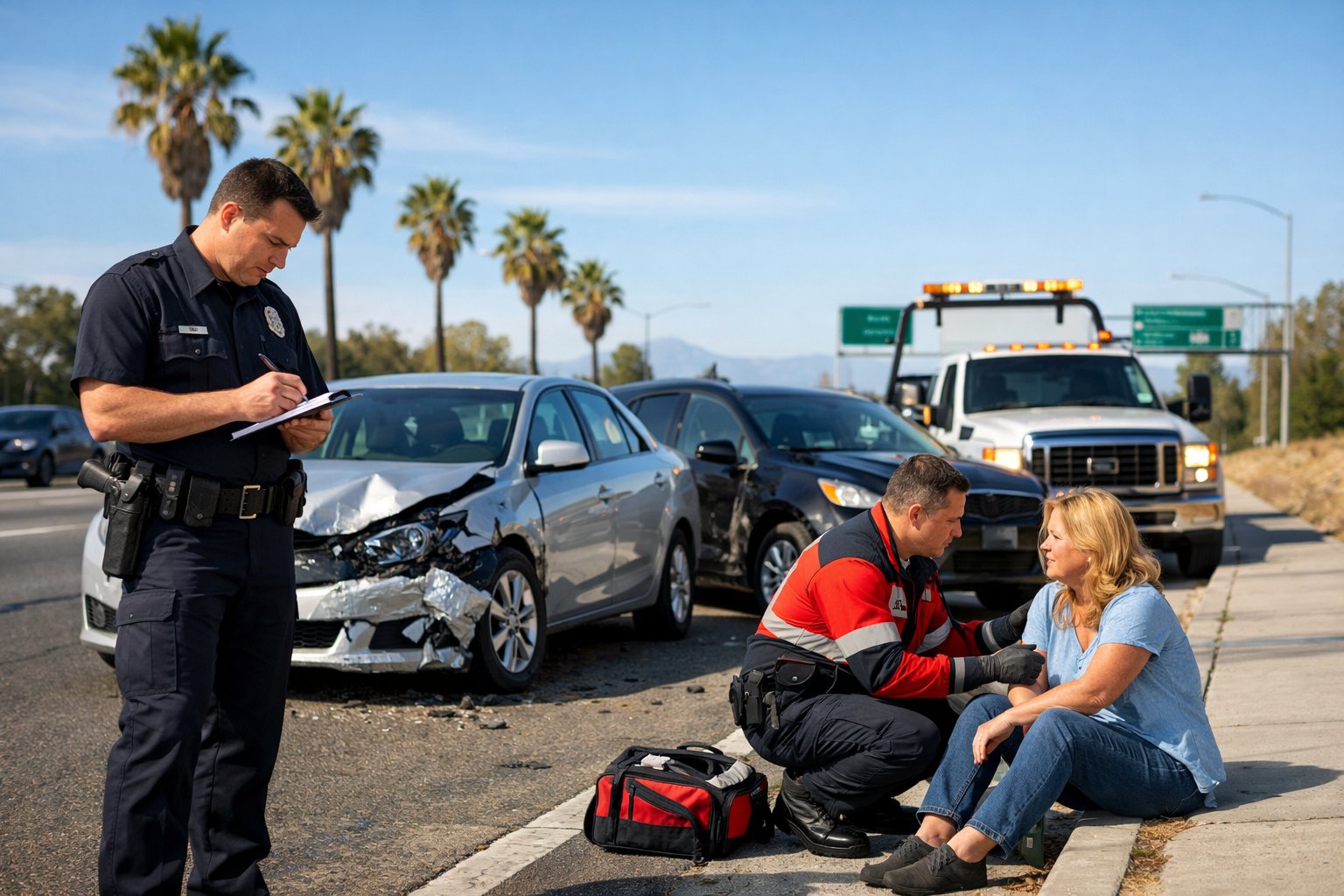
If you act quickly after an auto accident, you’ll protect your safety, keep evidence intact, and make sure there’s a legal record. These steps matter whether you’re dealing with a tiny fender-bender or something much more serious.
Ensure Safety and Remain at the Scene
First things first: check yourself and your passengers for injuries. If someone’s hurt, don’t move them unless it’s more dangerous to leave them where they are.
If you can, move your car to the shoulder or somewhere safe. Flip on those hazard lights to warn everyone else. If the car won’t budge, get out and stand away from traffic.
California law says you have to stay at the scene of any accident. If you leave before exchanging info or talking to the police—even for a minor scrape—you could get hit with hit-and-run charges.
If you’ve got flares or warning triangles, set them up. It’s not just for show; it helps stop more crashes and keeps everyone safer.
Call 911 and Cooperate With Emergency Responders
If someone’s injured or the cars are blocking traffic, call 911 right away. The dispatcher will send police and medical help to you.
You have to report the accident to police if there’s an injury, a death, or property damage over $1,000. That covers most situations. The officer will make an official accident report with all the details.
When you talk to the officer, stick to what you saw and know. Don’t guess about who caused it or admit fault.
Jot down the officer’s name and badge number. Ask how you can get a copy of the police report, you’ll need it for your insurance claim.
Document the Accident Scene and Collect Key Information
Pull out your phone and snap photos of all vehicles involved from different angles. Get shots of the damage, skid marks, debris, signs, and road conditions.
Record exactly where the accident happened. Note the street names, intersections, and any mile markers. Take wide shots to show the whole scene.
Don’t forget to photograph:
- Vehicle damage (every angle you can)
- License plates
- Street and traffic signs
- Skid marks and debris
- Weather conditions
- Any visible injuries you have
Write down the time and date. Note the weather, lighting, and traffic. These details help when it’s time to figure out who’s at fault.
Exchange Details With Other Drivers and Witnesses
Get the other driver’s full name, phone, and address. Write down their license and plate numbers. Grab their insurance company name and policy number.
Make a note of every car involved—make, model, color, year. Count how many people were in each vehicle.
Talk to anyone who saw the accident. Witnesses can back up your story. Get their names and contact info.
Don’t argue about fault with the other driver. Keep it business-like—just swap the required info: names, insurance, contact numbers.
Make a list of everyone who was there. Note if they were a driver, passenger, or witness, and how to reach them.
Essential Medical, Insurance, and Legal Actions Following a Collision

After a car accident, what you do next can really protect your health and legal rights. You need to get checked by a doctor, call your insurance company (but be careful what you say), and know when it’s time to get legal help.
Seek Prompt Medical Attention and Monitor for Hidden Injuries
Go see a doctor right away, even if you feel totally fine. It’s wild how many injuries don’t show up until hours or even days later. Whiplash, for example, might not make your neck hurt until the next day. Concussions can sneak up with headaches, dizziness, or confusion.
Internal bleeding is especially scary—it can be deadly and you might not notice anything at first. You could feel okay while serious injuries are developing. A doctor visit creates a record that links your injuries to the accident.
Watch out for these delayed symptoms:
- Headaches or migraines
- Neck and shoulder pain
- Numbness or tingling
- Belly pain or swelling
- Mood changes or personality shifts
Hang on to every medical record and bill. If you’ve got med pay coverage, it can help with those first medical costs no matter who caused the crash.
Notify Your Insurance Company Without Admitting Fault
Let your insurance company know about the accident as soon as you can. Most policies want you to report it within a day or two—sometimes up to 72 hours, but sooner is better. Give them the basics: when and where it happened.
Stick to just the facts when you call. Date, time, location, who else was involved. Don’t guess or try to explain why it happened.
The adjuster will probably ask you a bunch of questions. Answer honestly, but keep it short. If you don’t know something, just say you’re still gathering info.
Avoid Admitting Fault or Speculating About Liability
Don’t say you’re sorry or admit blame to anyone at the scene or afterward. Even a simple “I didn’t see you” can be twisted against you. In California, your compensation can drop if you’re found even partly at fault.
Honestly, you might not even know what really caused the crash right away. Sometimes it’s road conditions, a car defect, or something the other driver did. Let the investigation figure it out.
Skip posting about the accident on social media. Insurance companies check Facebook and Instagram. Even harmless posts can get used to suggest you weren’t hurt or that you caused the wreck.
Consult a California Car Accident Attorney to Protect Your Rights
A California car accident attorney can walk you through the legal process and keep your rights safe. These lawyers know the ins and outs of California law and how insurance companies operate. They’ll deal with the adjusters so you can focus on healing.
A good lawyer can help you get fair money for medical bills, lost work, and pain and suffering. Insurance companies often throw out lowball offers to people who don’t have legal backup.
Most California car accident lawyers work on contingency, so you don’t pay unless they win money for you. Set up a free consultation to talk about your case and see what your options are. The sooner you reach out to a personal injury attorney, the better—they’ll have more time to gather evidence and build your case.
Frequently Asked Questions
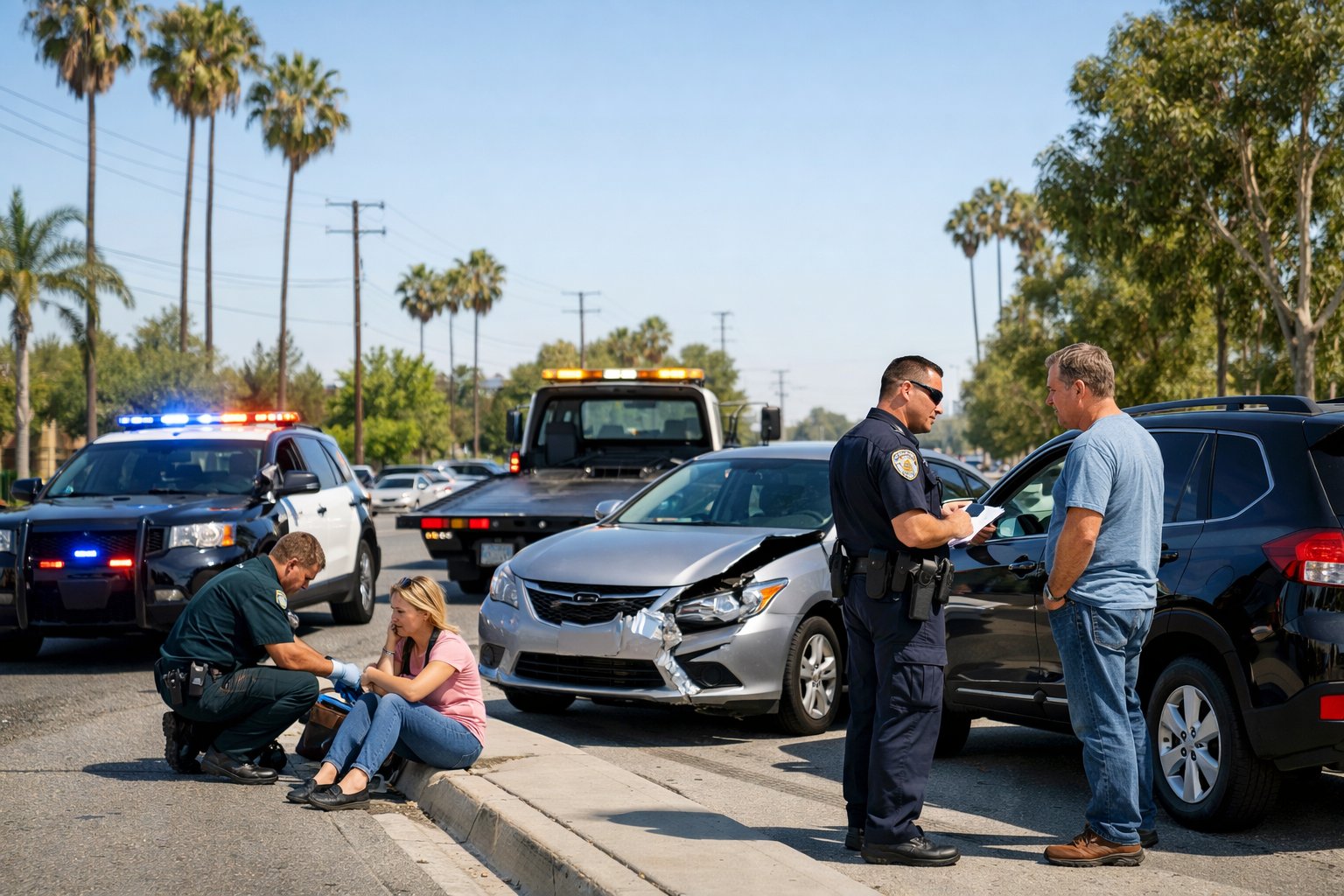
Not sure what to do after a car accident in California? You’re not alone. Here are some quick answers to the questions people ask most about handling those first 24 hours.
What immediate steps should you take following a car accident in California?
Stop your vehicle right away at the scene or as close as you can safely. Move your car to the side if it’s safe and won’t cause another accident.
Check yourself and your passengers for injuries first. If anyone’s hurt or there’s a lot of damage, call 911.
Turn on your hazard lights. If you’ve got flares or warning triangles, set them up, but only if it’s safe.
Snap photos of every vehicle, the damage, the road, and any injuries. Get shots of license plates, street signs, and traffic signals too.
What are the legal requirements for reporting a car accident in California?
California law says you need to report any accident to the DMV within 10 days if someone was hurt or killed—or if property damage tops $1,000.
You have to file a Report of Traffic Accident Occurring in California (SR-1) with the DMV. This is separate from any police report.
If someone was hurt, killed, or if the damage is over $1,000, you also have to show proof of financial responsibility (usually your car insurance).
You must call the police if anyone is injured or killed. Leaving the scene before law enforcement shows up, when required, can get you charged with a misdemeanor.
How do you exchange information with the other party after a California car accident?
Give the other driver your name, address, and vehicle registration number. If they ask, show your driver’s license.
Get their name, phone number, address, and insurance info. Write down their license plate, driver’s license number, and insurance policy number.
Ask for the names and contact info of any passengers in the other car. Get contact info from witnesses, too.
Don’t talk about who was at fault or say sorry. Just swap the basics.
When should you contact your insurance company after a car accident in California?
You should let your insurance company know about the accident as soon as you can. Most policies want you to report it within 24 hours.
Call your insurer even if you think you weren’t at fault. Policies usually have deadlines, and missing them could cause problems with your coverage.
Have your policy number, the date and place of the accident, and the other driver’s info handy when you call. Give them the facts, don’t guess about fault.
What are the common mistakes to avoid when filing an insurance claim in California?
Don’t wait too long to file your claim. Insurance companies sometimes deny late claims because it makes things harder to investigate.
Avoid giving recorded statements before you know your rights. What you say can be used to deny your claim.
Don’t jump at the first settlement offer. The first offer is usually lower than what you might actually deserve.
Never sign anything without reading it all the way through. Don’t agree to release the other party from liability until you know the full extent of your damages.
How does the California car accident claims process work?
When you get into a car accident in California, you usually start by reporting it to your insurance company or maybe the other driver’s insurer. After that, someone called an adjuster steps in to look at your claim.
The adjuster checks out the police report, talks to everyone involved, and takes a good look at the cars that got damaged. They try to figure out who’s at fault, following California’s comparative negligence rules.
You’ll need to gather up your paperwork—stuff like repair estimates, medical bills, and anything that shows you missed work because of the accident. Hang onto every receipt and record you can find.
Once the insurance company finishes looking into everything, they’ll throw out a settlement offer. If it seems low or doesn’t really cover what you lost, you can push back and negotiate. And if you and the insurance company just can’t agree, you might have to sue to get what you think you deserve.